
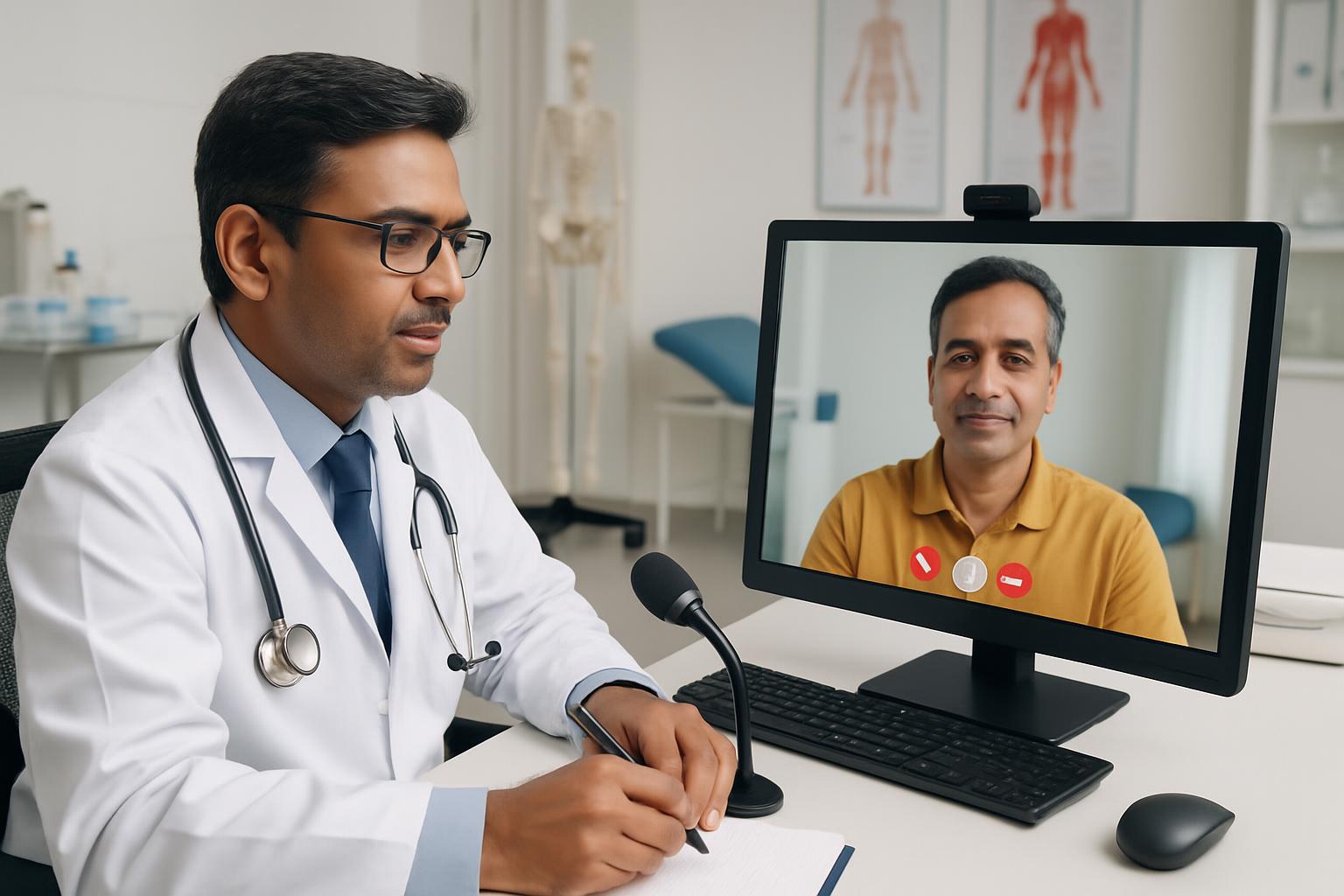
Telemedicine has emerged as a transformative force in India's healthcare landscape, bridging geographical barriers and extending quality medical services to previously underserved populations. The COVID-19 pandemic accelerated this digital transformation, turning what was once considered an alternative approach into a mainstream healthcare delivery channel. For medical professionals in India, understanding the evolving telemedicine ecosystem is no longer optional—it's essential for practice growth and patient care in the digital age.
The Evolution of Telemedicine in India
India's telemedicine journey began in the early 2000s with pilot projects primarily focused on connecting remote areas to urban medical expertise. However, several factors limited widespread adoption:
- Limited internet connectivity in rural areas
- Absence of clear regulatory guidelines
- High initial infrastructure costs
- Resistance from traditional healthcare providers
- Patient and physician skepticism about virtual care quality
The landscape changed dramatically in 2020 when the COVID-19 pandemic necessitated remote healthcare delivery. In response, the Medical Council of India (now National Medical Commission) released the Telemedicine Practice Guidelines in March 2020, providing the first comprehensive regulatory framework for telemedicine practice in India.
Key Milestones in India's Telemedicine Journey
- 2001: India's first telemedicine initiative launched by ISRO connecting Chennai's Apollo Hospital to a rural hospital in Aragonda village
- 2005: Establishment of the National Telemedicine Portal by the Ministry of Health and Family Welfare
- 2012: Launch of the National Digital Health Mission blueprint
- 2020: Release of official Telemedicine Practice Guidelines
- 2021: Integration of telemedicine into Ayushman Bharat Digital Mission
- 2023: Expansion of telemedicine services to include mental health and chronic disease management
- 2025: Comprehensive integration with the National Digital Health Ecosystem
Current Telemedicine Landscape in India
The telemedicine market in India has experienced exponential growth, with the sector valued at approximately ₹8,000 crore (US$1 billion) in 2025, up from ₹2,100 crore (US$250 million) in 2020. This growth trajectory is expected to continue at a CAGR of 31% through 2030.
Key Market Segments
India's telemedicine ecosystem encompasses several distinct segments:
1. Hospital-Based Telemedicine Services
Major hospital chains like Apollo, Fortis, and Max Healthcare have established robust telemedicine platforms, offering:
- Virtual consultations across specialties
- Remote monitoring for chronic conditions
- Post-discharge follow-up care
- Second opinion services
2. Independent Telemedicine Platforms
Venture-backed platforms like Practo, mfine, and DocsApp have created marketplace models connecting patients with doctors, featuring:
- On-demand consultations
- Subscription-based primary care
- Electronic health record integration
- E-pharmacy services
3. Government Telemedicine Initiatives
Public sector telemedicine programs focus on extending healthcare to rural and underserved areas:
- eSanjeevani: National Telemedicine Service with over 100 million consultations
- SEHAT (Social Endeavour for Health and Telemedicine)
- T-MANAS: Tele-Mental Health Assistance and Networking Across States
- State-level telemedicine networks
4. Specialty-Focused Telemedicine
Niche platforms addressing specific healthcare needs:
- Mental health (e.g., YourDOST, Wysa)
- Chronic disease management (e.g., BeatO for diabetes)
- Women's health (e.g., Proactive For Her)
- Pediatric care (e.g., BabyChakra)
Regulatory Framework for Telemedicine in India
The Telemedicine Practice Guidelines 2020 provide the legal foundation for telemedicine practice in India. Medical professionals must understand these regulations to ensure compliance and mitigate legal risks.
Key Provisions of the Telemedicine Guidelines
1. Eligible Medical Practitioners
Only registered medical practitioners (RMPs) under the Indian Medical Council Act 1956 are permitted to practice telemedicine. Practitioners must:
- Complete a mandatory online course within three years of notification
- Register on the Online National Medical Registry
- Display registration details during teleconsultations
2. Consultation Modes
The guidelines recognize multiple communication channels:
- Video: Synchronous, real-time video consultations
- Audio: Voice calls and phone consultations
- Text: Chat, messaging platforms, email, fax, etc.
- Asynchronous: Transmission of health information for later review
3. Patient Identification and Consent
Practitioners must:
- Verify patient identity through appropriate means
- Obtain and document patient consent (implied or explicit)
- Maintain records of teleconsultations
- Ensure patient confidentiality and data privacy
4. Prescription Guidelines
Medications are categorized based on safety profiles and prescription restrictions:
- List O: Over-the-counter medications that can be prescribed via any mode of consultation
- List A: Relatively safe medications that can be prescribed during first consultations
- List B: Medications that can only be prescribed during follow-up consultations
- Prohibited: Narcotics, psychotropic substances, and Schedule X drugs cannot be prescribed via telemedicine
5. Consultation Types
The guidelines define different consultation scenarios:
- First Consultation: Initial interaction between patient and doctor
- Follow-up Consultation: Within six months of previous in-person or telemedicine consultation
- Emergency Consultation: Limited to first aid, life-saving advice, and referral
Recent Regulatory Developments
Since the initial guidelines, several updates have shaped the regulatory landscape:
- 2021: Integration with Ayushman Bharat Digital Mission framework
- 2022: Expanded scope to include allied healthcare professionals
- 2023: Enhanced data protection provisions aligned with Digital Personal Data Protection Act
- 2024: Guidelines for AI integration in telemedicine platforms
- 2025: Framework for cross-border telemedicine services
Implementing Telemedicine in Medical Practice
For medical professionals looking to incorporate telemedicine into their practice, several key considerations must be addressed:
Technology Infrastructure
The foundation of effective telemedicine practice includes:
1. Telemedicine Platforms
Options for Indian medical professionals include:
- Dedicated telemedicine platforms: Practo, Lybrate, DocPrime, etc.
- Hospital management systems with telemedicine modules: HealTech, eHospital, etc.
- General video conferencing tools: Zoom Healthcare, Google Meet, Microsoft Teams
- Custom-built solutions: Tailored to specific practice needs
2. Hardware Requirements
- High-definition webcam
- Quality microphone and speakers/headphones
- Stable internet connection (minimum 10 Mbps upload/download)
- Adequate lighting
- Secondary display for EHR access during consultations
3. Digital Health Tools
- Electronic health records (EHR) system
- E-prescription software
- Digital payment integration
- Appointment scheduling system
- Remote monitoring device integration
Clinical Protocols for Telemedicine
Establishing standardized protocols ensures quality care and regulatory compliance:
1. Patient Triage
Determining which conditions are appropriate for telemedicine:
- Suitable for telemedicine: Follow-up consultations, chronic disease management, medication refills, minor acute conditions, mental health counseling
- Requiring in-person care: Medical emergencies, conditions requiring physical examination, procedures, diagnostic testing
2. Consultation Structure
A systematic approach to teleconsultations includes:
- Pre-consultation preparation (reviewing records, technical check)
- Patient identification and consent
- History taking and virtual examination
- Diagnosis and treatment plan discussion
- Documentation and follow-up planning
3. Virtual Examination Techniques
Adapting physical examination for telemedicine:
- Visual inspection techniques
- Patient self-examination under guidance
- Remote monitoring device integration
- Caregiver-assisted examination
4. Emergency Protocols
Procedures for managing urgent situations:
- Identifying red flags requiring immediate attention
- Emergency contact information collection
- Referral pathways to emergency services
- Documentation of emergency advice
Business Models for Telemedicine Practice
Various revenue models have emerged for telemedicine services in India:
1. Fee-for-Service
- Per-consultation charges (typically ₹300-1,500 depending on specialty and doctor experience)
- Tiered pricing based on consultation duration
- Differential pricing for first vs. follow-up consultations
2. Subscription Models
- Monthly/annual packages for unlimited consultations
- Family subscription plans
- Corporate employee wellness programs
3. Hybrid Practice Models
- Integrating telemedicine with traditional in-person practice
- Using telemedicine for follow-ups and monitoring
- Hub-and-spoke models connecting main facilities with satellite clinics
4. Value-Added Services
- Remote monitoring packages
- Digital therapeutic programs
- Second opinion services
- Health coaching and preventive care
Challenges and Solutions in Telemedicine Implementation
Despite significant progress, several challenges remain in telemedicine adoption:
Technical Challenges
| Challenge | Solution |
|---|---|
| Limited internet connectivity in rural areas | Low-bandwidth optimized platforms, asynchronous consultation options, mobile-first approach |
| Digital literacy barriers | Simplified user interfaces, local language support, assisted telemedicine through health workers |
| Integration with existing systems | Open APIs, interoperability standards, phased implementation approach |
| Cybersecurity concerns | End-to-end encryption, regular security audits, staff training on data protection |
Clinical Challenges
| Challenge | Solution |
|---|---|
| Limited physical examination | Remote monitoring devices, standardized self-examination protocols, AI-assisted diagnostic tools |
| Diagnostic accuracy concerns | Clear triage guidelines, low threshold for in-person referral, continuous quality assessment |
| Continuity of care | Integrated EHR systems, structured follow-up protocols, care coordinator roles |
| Emergency management | Pre-identified emergency contacts, geolocation integration, emergency response networks |
Operational Challenges
| Challenge | Solution |
|---|---|
| Scheduling and workflow integration | Dedicated telemedicine time blocks, virtual waiting rooms, automated reminders |
| Payment processing | Multiple digital payment options, insurance integration, transparent pricing |
| Staff training | Structured telemedicine training programs, role-specific protocols, regular skill updates |
| Patient education | Pre-consultation guidance, instructional videos, technical support resources |
Regulatory and Legal Challenges
| Challenge | Solution |
|---|---|
| Evolving regulatory landscape | Regular compliance reviews, membership in telemedicine associations, regulatory update monitoring |
| Liability concerns | Comprehensive informed consent, clear documentation, telemedicine-specific malpractice insurance |
| Cross-state licensure | Understanding state-specific regulations, multi-state registration where required |
| Data privacy compliance | DPDP Act compliance measures, privacy impact assessments, patient data access protocols |
Future Trends in Indian Telemedicine
Several emerging trends will shape the future of telemedicine in India:
1. AI Integration
Artificial intelligence is enhancing telemedicine capabilities through:
- Automated triage and symptom assessment
- Clinical decision support systems
- AI-assisted diagnostics (radiology, dermatology, pathology)
- Natural language processing for documentation
- Predictive analytics for patient risk stratification
2. Remote Monitoring Expansion
The integration of remote monitoring technologies is creating continuous care models:
- Wearable health devices with clinical-grade accuracy
- Internet of Medical Things (IoMT) ecosystems
- Smartphone-based diagnostic tools
- Remote therapeutic monitoring programs
- Home-based lab testing integration
3. Specialty Telemedicine Growth
Specialized telemedicine services are expanding beyond general consultations:
- Telepsychiatry and mental health services
- Virtual rehabilitation programs
- Remote surgical assistance and telementoring
- Tele-ICU and critical care support
- Specialized chronic disease management programs
4. Integration with Digital Health Ecosystem
Telemedicine is becoming part of a broader connected health infrastructure:
- Ayushman Bharat Digital Mission integration
- Unified Health Interface for interoperability
- Health ID-linked electronic medical records
- E-pharmacy and home delivery medication services
- Digital health insurance claim processing
5. Hybrid Care Models
The future of healthcare delivery will blend virtual and physical care:
- Virtual-first care pathways with in-person options
- Micro-hospitals with telemedicine support
- Home healthcare augmented by virtual specialist consultations
- Community health worker programs with telemedicine backup
- Hospital-at-home programs for selected conditions
Conclusion: Embracing the Telemedicine Opportunity
Telemedicine represents a paradigm shift in healthcare delivery in India, offering solutions to longstanding challenges of access, affordability, and quality. For medical professionals, telemedicine is no longer just an alternative mode of care but an essential component of modern practice.
The COVID-19 pandemic accelerated telemedicine adoption by necessity, but its continued growth is driven by the tangible benefits it offers to all stakeholders. Patients gain convenient access to care without travel burdens, doctors extend their reach beyond physical clinic limitations, and the healthcare system benefits from improved efficiency and resource utilization.
As India progresses toward its digital health vision, telemedicine will play an increasingly central role in healthcare delivery. Medical professionals who embrace this transformation—developing the necessary technical skills, adapting clinical workflows, and understanding the regulatory landscape—will be well-positioned to thrive in this evolving ecosystem.
The future of healthcare in India will not be exclusively virtual or physical but a thoughtful integration of both approaches, leveraging the strengths of each to create a more accessible, efficient, and patient-centered system. By understanding and adapting to these changes, medical professionals can lead rather than follow in this healthcare revolution, shaping a future that works better for both providers and patients.


Comments
Leave a Comment